
Trace former Logan County property owners
Work backward through recorded transfers, one step at a time. Open with the present tax account and the most recent instrument the clerk recorded. Each grantee points you to the earlier deed. That deed put the land in that party's hands. References and legal descriptions build the chain, not a name search alone. Logan County's older deeds often describe an acreage tract or a survey. Others name a creek, a lot, or a coal-company holding instead of a street address. Expect the land, not the address, to stay constant.
| Transfer step | What to record | Next move |
|---|---|---|
| Current instrument | Recording date, grantor, grantee, book/page | Find the grantee's acquisition deed |
| Prior deed | Legal description, tract, acreage, cited instrument | Search the prior owner as grantee |
| Earlier index entry | Name variant and index reel reference | Check both grantor and grantee indexes |
| Estate or court step | Fiduciary, heir, case, or order reference | Read the probate or court file |
Every transfer in the chain must connect to the same land. When the wording shifts, compare acreage, adjoining owners, the survey, and any later plat. A chain can hold a correction deed. It can also hold an estate conveyance, a trustee sale, or a court order. Not every change fits a simple sale story.
How far Logan County online deeds reach
The Logan County Clerk states that its Cott online convenience link reaches land deeds, trust deeds, and liens filed from 1988 forward. That marks the online boundary only. It is not where the county's historical records begin. A deed may be missing from the portal. It may well sit in an older index, a bound deed book, or on microfilm.
Start from the latest instrument you can verify. Write down the parties and recording date. Note the book and page, legal description, and any prior deed cited. Then take the earlier step through the clerk or an archive route. Keep online and archival references separate in your notes. That way another researcher can tell which source supplied each date. The Cott link is named for deeds, trust deeds, and liens. It promises neither a probate file nor every old deed book on the web.
Use Logan County grantor and grantee reels
WVU's Logan finding aid splits the main deed indexes by role. LOG 1-4 hold the grantor reels. LOG 5-8 hold the grantee reels, and the deed books sit on LOG 9-19. That structure suits the walk from a known modern owner into older land records. Search the current owner in the earlier grantee index. Find the acquisition deed there. Then hunt that deed's grantor as the prior owner.
Expect some noise along the way. A spelling change, a first initial, a company name, or a fiduciary can break the line. So work both indexes when the chain does not line up on the first pass. The finding aid inventories records; it does not claim every reel is online. When you contact WVU, give the reel group and an approximate date. That works better than asking only for old Logan County deeds.
The WVU Logan County court-record finding aid lists the reel groups and related land material.
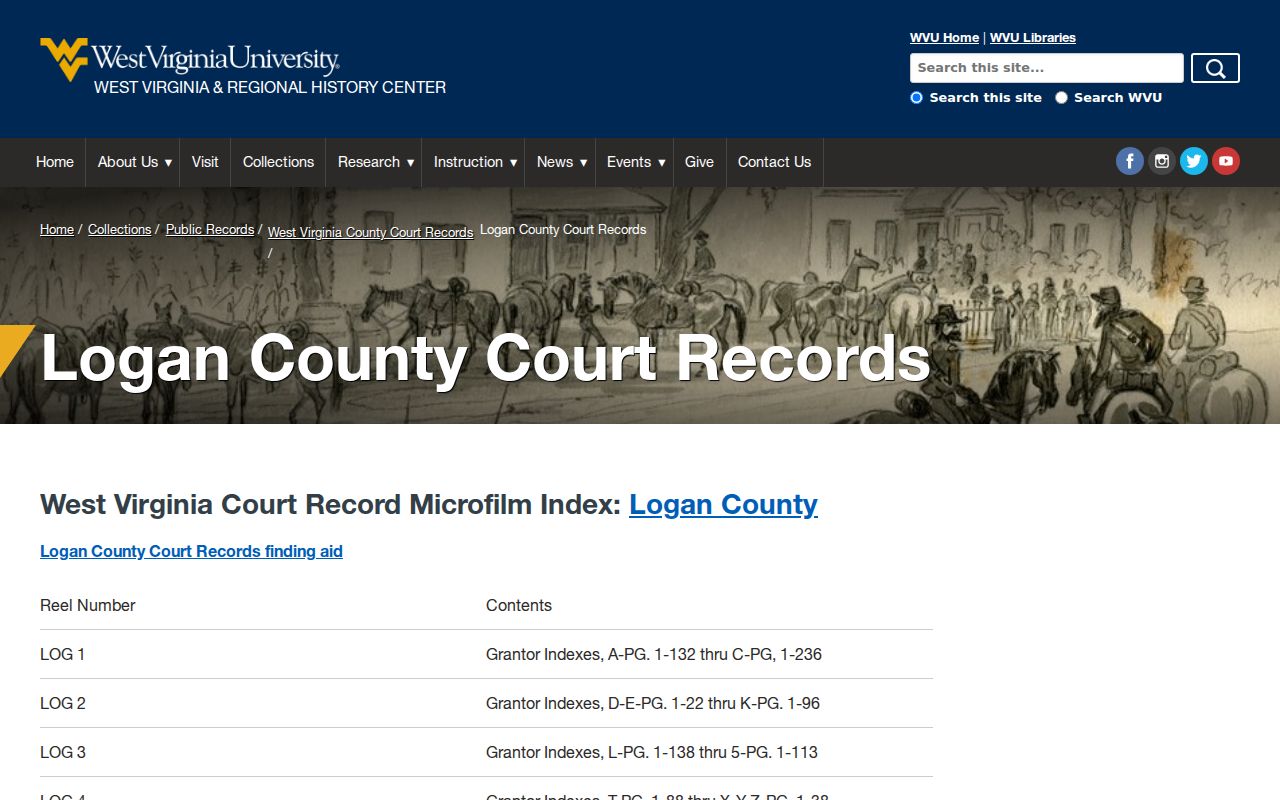
The captured inventory helps turn a backward chain into a specific archival request.
Logan County deed books and archive notes
The West Virginia State Archives notes list typed Logan deeds for 1836-1894 and deed-index material through 1935. WVU's description reaches across deed books, indexes, land books, contracts, leases, commissioners' records, wills, and maps. FamilySearch catalogs identify still more: Logan deed books through 1968, land books through 1902, personal-property tax books from 1824-1850, surveyor records through 1968, and trust deeds through 1982. Access and image availability vary by collection.
Start with the official archive and WVU finding aids, then record which catalog or reel supplied each result. A catalog entry is a locator, nothing more. Some material requires a request, a visit, or an account. The State Archives notes for Logan County summarize the typed deeds and index coverage on the historical county-record guide.
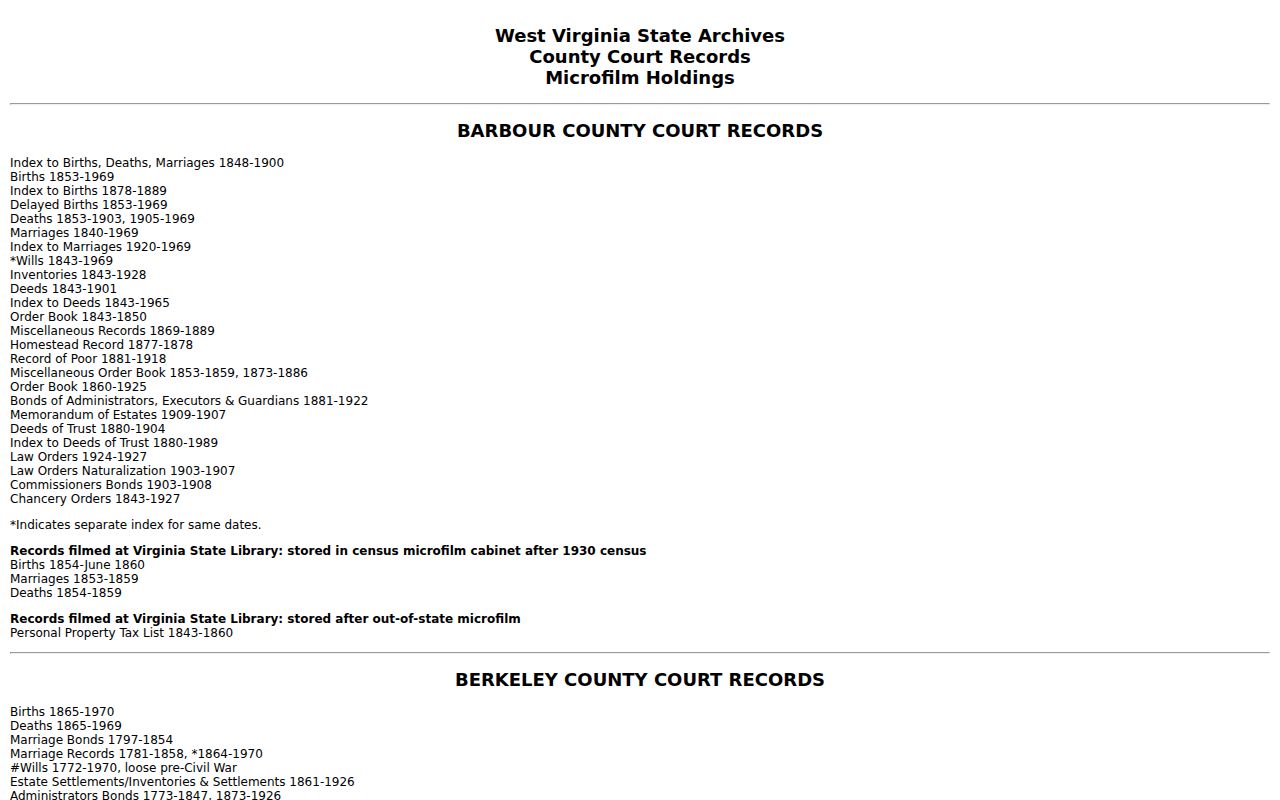
The cutoff between the online portal and the older books marks a change in access channel, not a records disaster. The West Virginia State Archives county-record catalog is another official locator for Logan material and lays out the county holdings route.
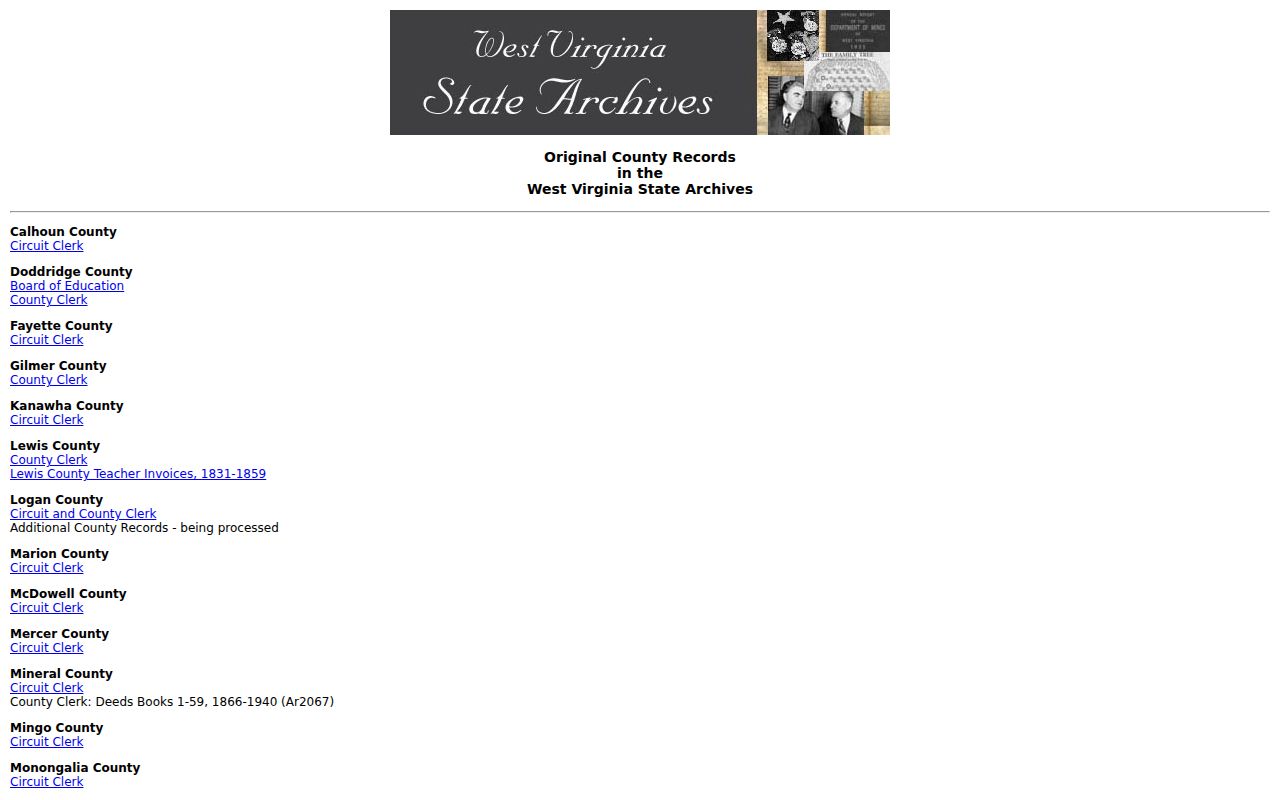
Use the catalog to find the right collection first. Then request the referenced book or reel rather than assuming an image is online.
Read Logan County land and survey records
Logan County's older land records survive in distinct groups. Land books sit on LOG 181 through 188. Surveyor records sit on LOG 177 to 179 and LOG 202. Contracts sit on LOG 190 to 192, and leases on LOG 193 to 196. Each entry carries its own date and purpose. A survey, land-book line, or lease is a research clue. It is not necessarily a deed of conveyance. These volumes often link a tract to an earlier deed. That deed predates any modern parcel number.
When an older deed cites a survey, copy everything. That means the book, page, survey name, acreage, the creek or river, and the adjoining owners. Then compare those details against the next deed in the chain. Rights of way, additions, and subdivisions may appear instead in a recorded plat. The clerk lists plat maps at $11, though the state statute quotes a different amount for a plat without a deed. So confirm current pricing before ordering. The West Virginia State Archives county-record catalog and the WVU finding aid document the starting points. They cover these books.
Search name changes in Logan County deeds
A backward chain often breaks on a name. Spelling variants, initials, coal companies, LLCs, and estates all hide the real grantor. Search the legal name on the instrument. Then try likely variants in both the grantor and grantee indexes. A married name may not match an older entry. A company may appear in shortened form. An executor or administrator may sign a transfer in place of the decedent. Record every alternative to keep the chain explainable.
Legal descriptions shift style over time too. One deed names a tract and creek. Another cites a survey. A later account uses a road address. Compare acreage, landmarks, neighbor names, cited book and page, and plat references before joining two records. A shared surname or close acreage alone proves nothing.
Logan County's valleys and hollows make place names especially fluid. A community or street label may change. Let the legal description and transfer reference carry the chain whenever that happens.
Probate can bridge Logan County owners
An estate file often explains how the next grantee got the property. That chain begins after a past owner died. The Logan County Clerk handles wills, estates, guardianships, and notices to heirs. Start with the decedent's name. Then look for an executor or administrator deed, heir conveyance, survivorship instrument, or court order in the land index. Probate establishes the authority; the recorded instrument ties the transfer to land.
WVU's finding aid lists Logan Will Books 8 and 9, plus LOG 188, an index to wills, along with appraisement and sale books. Online Cott coverage exists for land deeds, trust deeds, and liens from 1988 forward. But that is not a full probate archive. Ask the clerk about the relevant file and the copy process.
Obituaries can help a family researcher pin down a date or a name variant. They are not title evidence, though. Keep protected Social Security and medical details out of public notes.
Connect former Logan owners to a tract
A street address may simply not have existed when an early owner held the land. Logan County deeds identify acreage, named tracts, and surveys. They also show river or creek frontage, lots, coal-company land, and adjoining owners. Those details can be matched from one instrument to the next. This works even when today's community label differs. Write down the full legal description instead of reducing it to a road name.
Where the parcel meets a plat or an old survey, keep both the book and page. Also keep the drawing reference. County GIS shows current parcel geometry and neighbors. Older maps and land books explain historical divisions. A current map guides you to a location. It does not prove an old tract and a current tax parcel are the same thing.
Use the archive's reel and book numbers so the next search is reproducible. The historic route moves slower than a modern portal. Still, it is the documented way. It carries a Logan County ownership history back beyond 1988.
Limits of Logan County ownership history
Any chain built from indexes can hold gaps. Some pages are unreadable, and spellings drift. Land descriptions may need professional review. An index entry is not the complete deed. A deed does not guarantee that no later instrument changed the interest. A probate file or court order may explain a transfer a name-only search misses. For an official title conclusion, request certified instruments and rely on a title professional.
Logan County publishes no official property-fraud alert service. No courthouse fire accounts for missing records here. Treat the online boundary and the historic book route as different access paths. They are not destruction and survival. When an unexpected filing appears, verify it with the clerk and the full instrument.
The Logan County deed records page explains copies and instrument types. It is the next step for one document. This former-owner route connects successive owners backward.