
What Logan County property value means
Three numbers can all be called a Logan County property value. The assessor's appraised value is an opinion of worth. The assessed value is the tax base after the state ratio. The consideration in a deed is simply what a transfer stated. They answer different questions. They rarely match, and they should not. A sale price is history. An assessed value feeds the levy. Market value estimates what a voluntary sale might bring today. Before quoting any amount, identify its source, date, and purpose. A deed record, a tax card, and an appraisal each carry their own meaning.
| Value type | Meaning | Where it appears |
|---|---|---|
| Appraised value | Assessor's estimate of true and actual value | Assessor account or assessment report |
| Assessed value | Tax value set at 60 percent under state law | Assessor roll |
| Recorded consideration | Amount or consideration tied to a deed transfer | Recorded instrument and sales data |
| Market value | Estimated price in a voluntary sale | Appraisal or market analysis |
Logan County publishes no single number that covers all of these meanings. Match the record type and date to the question before calling a parcel worth a stated amount.
Why Logan County assessed value is 60 percent
West Virginia Code §11-3-1 sets the assessment rule. Annual real-property assessment is 60 percent of true and actual value. The Logan County assessor sums up the math plainly: Appraised Value × 60% = Assessed Value. Then Assessed Value × Levy Rate = Tax. A companion provision, §11-1A-3, defines assessed value with the same ratio after statewide reappraisal. The ratio builds the tax base. It is not a promise that a parcel could sell for the assessed figure.
Picture a hypothetical market estimate of $100,000. The assessed value would ordinarily come to $60,000 before class and levy calculations. The deed consideration may sit above or below that. A transfer can reflect a family sale, unusual terms, or property condition. Do not substitute its price for the assessor's opinion without weighing the context.
West Virginia Code §11-3-1 sets the July 1 assessment date and the 60 percent rule.
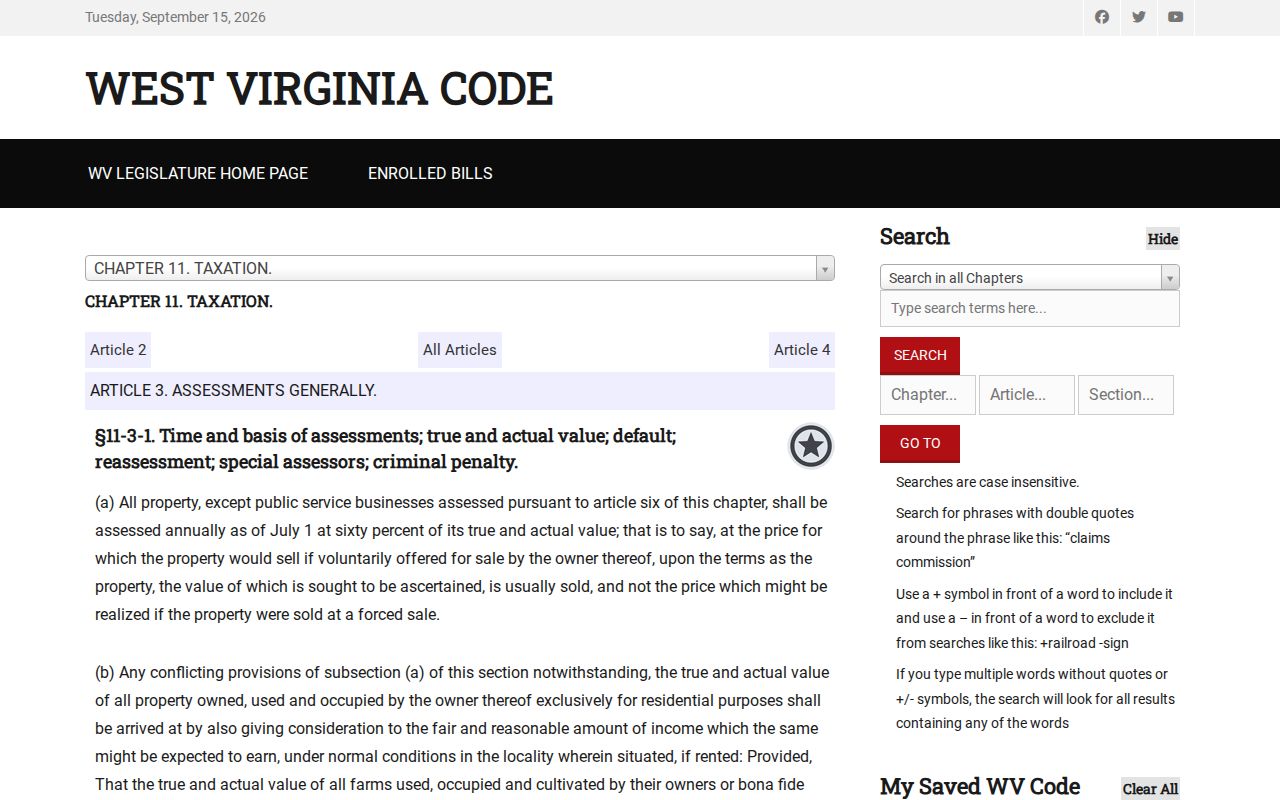
The law explains the ratio, while the parcel's class and levy data complete a Logan County tax estimate.
Keep Logan appraised, assessed, and sale figures apart
Appraised value is the assessor's estimate. Assessed value comes from the state ratio. A recorded consideration is the figure a deed attached to a transfer. It is not always stated at all. Market value is the broader estimate for a voluntary sale. A tax card can display appraised and assessed fields. It cannot refresh an old deed price or reveal what a buyer would offer today.
When two numbers disagree, write their dates and labels side by side. The assessor values property annually. Its portal is not a daily transaction feed. A deed date and an assessment date may not align. A recent transfer can enter the deed record first. The owner of record changes on the tax roll after.
For a purchase, refinance, estate, or tax question, pick the measure that fits the purpose. A licensed appraiser delivers a property appraisal. A title search checks ownership and recorded interests. An assessor card supports tax administration in Logan County.
Use Logan County sales search for context
The Logan County assessor provides a separate sales search. Its filters cover start and end date, price range, square footage, and acreage. You can also filter by Property Type, Sale Qualification, and Sale Type. It is a strong tool for transaction context. Do not guess what a qualification code means, though. Open the live form and read its choices before treating any filter as a rule.
Compare the subject parcel with candidate sales by date, acreage, building area, and property type. A sale on a different tract or with unusual terms may not be comparable. Keep the recorded consideration distinct from the assessor's values and from an independent appraisal. A handful of filtered sales is evidence to examine, not a valuation conclusion.
Logan County Sales Search runs separately from the owner and address search. It displays its filter ranges.
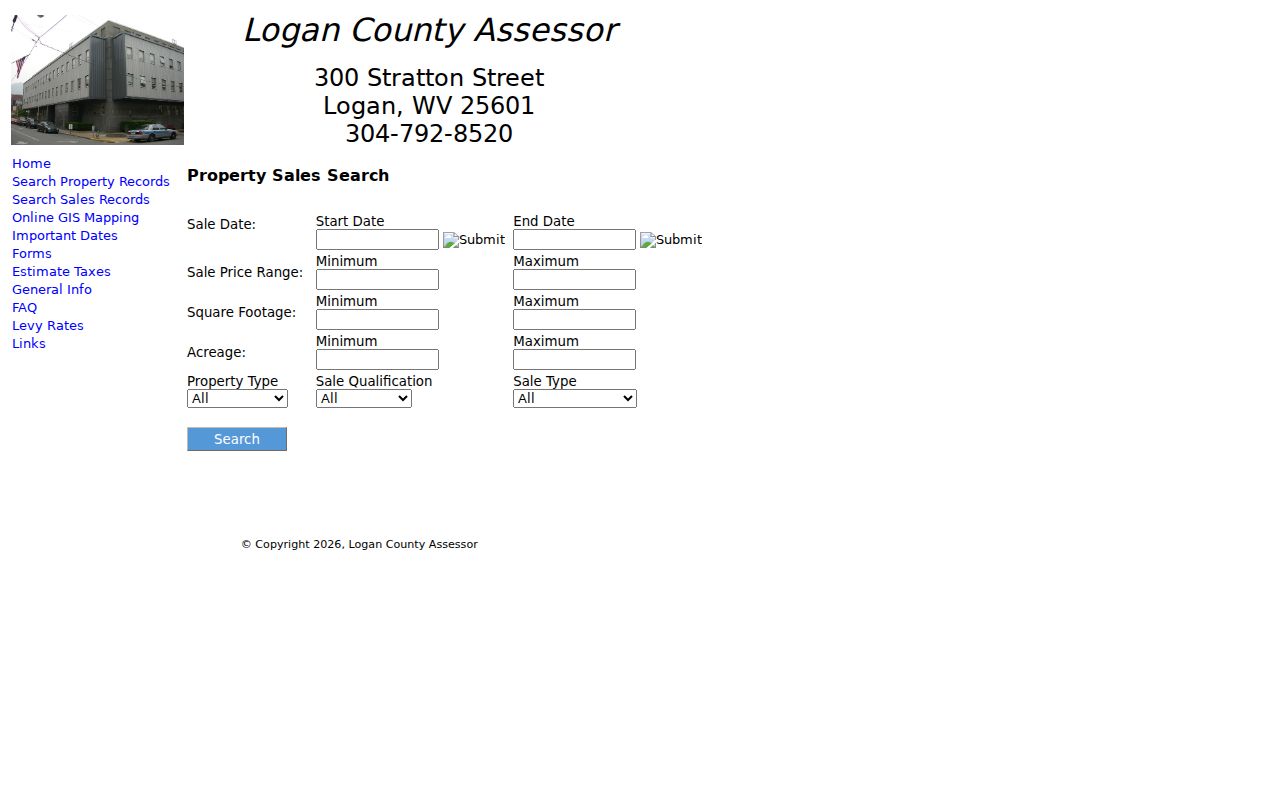
Use the filters to spot Logan County transfers worth reviewing, then verify each one in the deed record itself.
Land and building values in Logan County
The WV Property Viewer sample inventory lists building information, cost values, and appraised values. Those fields show how an assessment card describes land and improvements. A building or cost figure is not the price of the whole parcel. It does not set the price in a future sale. Read the property type, acreage, class, and value fields together. Do not grab the largest number as a market price.
If an improvement looks missing or dated, ask the assessor how the account was updated. Logan County assessors visit real estate at least every three years. Market values, cost studies, and land values are updated each year. No parcel-level reason code or published city trend series exists. Do not infer why one number changed. Compare the assessment report with the deed's lot or tract description. If the GIS map shows a different parcel shape, resolve the account identity first. Only then should you trust its value.
Property class changes Logan tax math
Logan County tax bills start with a class assignment. Class II covers owner-occupied homes and owner-used farms. Class III takes in comparable taxable property outside incorporated municipalities, while Class IV covers comparable taxable property inside them. That label matters. Two parcels with nearly identical assessed values can land on very different bills once their classes apply the tax calculation differently.
So a class question deserves real attention. Never guess a class from a mailing address in Logan, Chapmanville, or Man. Read the class printed on the account. When location could change the outcome, check the parcel against current municipal boundaries. A disputed class or taxability question belongs with the assessor, who applies the relevant statute. A value record feeds a tax calculation. But it never states a full market opinion, and a class question goes to the assessor rather than to a deed index or a map label.
Annual Logan County valuation is not daily
West Virginia sets July 1 as its annual assessment date. The pace matters. The Logan assessor values property every year. It updates land values and cost studies annually. The office visits real estate at least once every three years. Land and personal-property books close by January 30. February then brings the review period. That cycle explains why a web card can lag a very recent change.
The assessor publishes no city value-trend series for Logan and no guaranteed portal refresh schedule. Use the assessor's Sales Search for local context. Annual land-value work adds useful background too. Still, confirm an account's current figures directly with the office rather than trusting a card. A missing series is no excuse for an unsourced estimate. Judge each value against its assessment year, class, and parcel number. Build any trend from like property and dates instead of a single county-wide headline.
Appeal value through Logan County tax records
A value dispute can turn into an appeal. The appeal targets the tax roll, though, not the negotiated price in a deed. Timing is tight. The assessor's books close by January 30. The Board of Equalization and Review begins by February 1, and a written valuation protest is generally due around February 20 under the cited provisions. A petition to the Office of Tax Appeals is generally due March 31 when required. Confirm each current-year date with Logan County.
Value is only part of the story here. The Logan County property tax records page handles classification, exemptions, and appeal routes in detail. When you ask the assessor about a correction, keep the parcel account, class, appraised amount, assessed amount, and evidence together.
What Logan County property value cannot prove
An assessed value exists for tax administration. It does not predict what a buyer will pay. It cannot guarantee a lender's valuation or establish condition. A recorded sale marks a transfer event that may not resemble an open-market transaction, and a GIS cost field is no certified appraisal. Label every figure with its source and date.
Value is not a sale promise. Logan County assessed value follows a tax formula and is not an appraisal of what a property would sell for. Use a qualified appraiser for a formal market opinion.
A value used for a tax bill needs the levy and account status confirmed with the county. For a title concern, read the recorded deed. Confirm the legal description too. No number without its source can carry the whole property question.