
Logan County property tax records by source
Logan County property tax records split cleanly by office. The assessor holds the value, class, and levy data that shape a tax amount. The sheriff handles collection, delinquency, and redemption. A property card helps explain how an amount was built. It never serves as the payment receipt. Identify the parcel and tax year first, then route the question to the right office. The county publishes no standalone online Logan tax-bill search with a public field list.
| Record or field | What it shows | Where to check |
|---|---|---|
| Appraised value | Assessor's estimate of true and actual value | Logan County Assessor |
| Assessed value | Tax base calculated at 60 percent | Assessor card and state law |
| Property class | Class used for the tax treatment | Assessor account |
| Levy rate | Rate applied to assessed value | Assessor levy links and state reports |
| Payment or redemption | Collection stage and payment route | Logan County Sheriff's Office |
| Assessment objection | Classification, taxability, or valuation issue | Assessor and Board of Equalization and Review |
The table keeps value, tax, and payment questions separate. An assessor result does not prove a bill was paid, and a delinquent flag is not a foreclosure order. When calling the sheriff about a Logan County account, have the reference number and tax year ready.
Logan assessed value uses a 60 percent ratio
West Virginia Code §11-3-1 sets the annual assessment rule. Real property in West Virginia is assessed at 60 percent of true and actual value. The Logan County assessor gives the practical formula. Appraised value multiplied by 60 percent yields the assessed value. The assessed value multiplied by the levy rate yields the tax. So a $100,000 market estimate would ordinarily produce $60,000 assessed. Class and other details apply first. The deed's consideration is a transaction fact, separate from the assessor's tax base.
Read appraised and assessed as different fields on the card. A low assessed value does not mean a sale at that figure is expected. A high recorded price does not prove an error. Class and levy rate both shape the final tax bill. Compare the full account rather than multiplying a sale price by a rate. The statutory text of §11-3-1 states the assessment ratio and the date it applies.
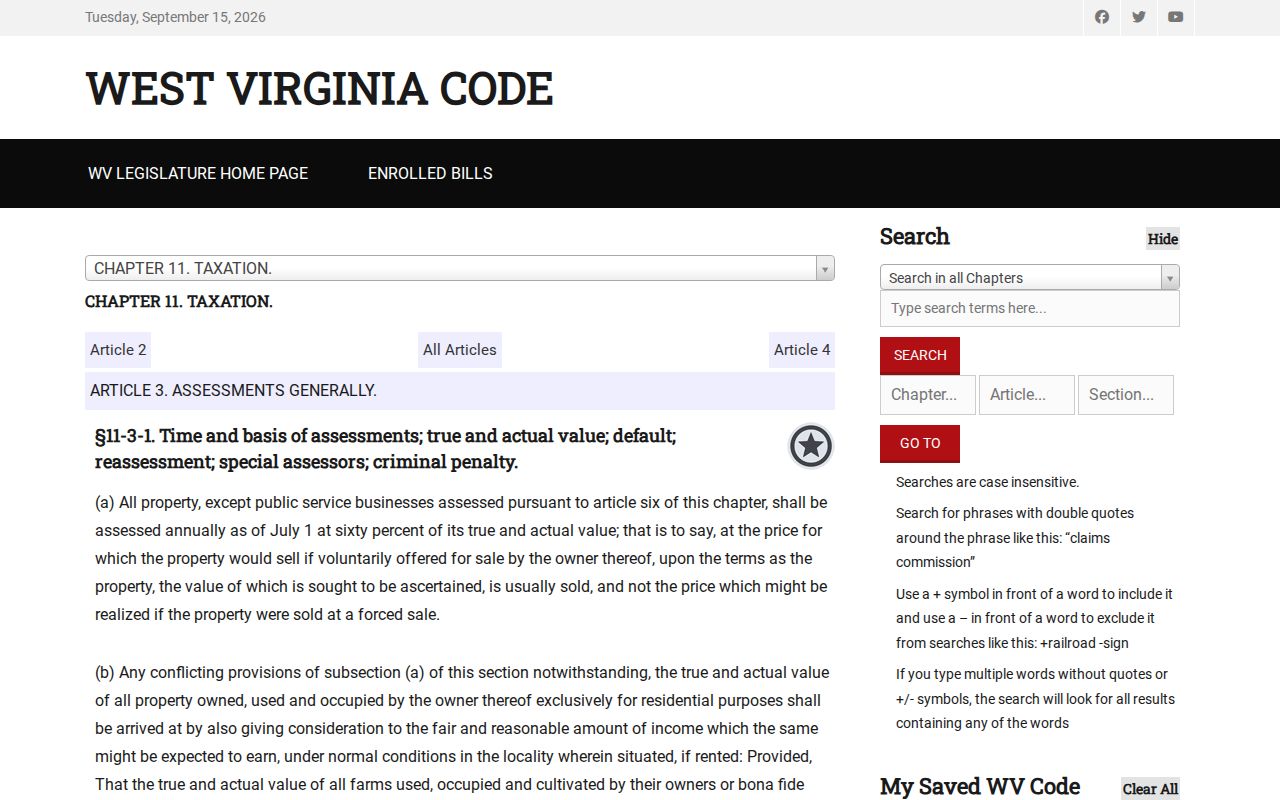
The 60 percent rule sets the base calculation, not the amount owed on an account.
July 1 sets the Logan County assessment date
Every parcel in Logan County gets assessed once a year. State law fixes July 1 as the reference date. Value means what the property would bring in a voluntary sale. Statutory breaks apply to owner-occupied homes and farmland. The date is only a reference point. It does not mean every account refreshes online that day. A deed recorded later at a higher price does not automatically become the tax value.
The assessor visits each tract at least once every three years. Market studies, cost data, and land values get updated annually. County-wide trends flow into the books without a new visit to every parcel. A portal card reflects that yearly work plus periodic inspection. It is not a real-time change after each event.
A Logan County property tax record can look stale. Check the assessment year against the latest recorded deed date. A recent transfer, improvement, or correction may be missing. Ask the assessor how the current book handles it. There is no promised daily update interval.
Classes II, III, and IV in Logan County
The class on a Logan County tax account is part of the math. The assessor describes Class II as owner-occupied residential property and owner-used farms. Class III covers comparable taxable property outside municipalities other than Classes I and II. Class IV is the same kind of property inside municipalities. The inside-or-outside line can matter even when two parcels share a postal label or road.
Confirm the class for the specific parcel. Do not infer it from an address, an owner of record, or a ZIP code. A Logan mailing city may not settle the question. The parcel could sit inside Logan city or another incorporated place. Compare current municipal boundaries. Ask the assessor if the classification or occupancy details seem wrong.
Classification and taxability questions travel a different route than a value objection. W. Va. Code §11-3-24A lets a taxpayer request classification or taxability information. It also allows a written objection during the property-book period. Keep the parcel account and the reason for the objection.
Logan County books and the February review
Logan County's land and personal-property books close on a tight clock, and the assessor finishes both by January 30. That date matters. It feeds the February 1 deadline for the Board of Equalization and Review. The county commission itself sits as that board. The board may adjourn after February 15. It must wrap up by the last day of February. Taxpayers should treat that window with care. Check each year's posted dates in Logan County rather than a general calendar alone.
A written valuation protest usually falls around February 20 under the statute. March 31 is the general due date. That applies when a valuation petition to the Office of Tax Appeals is required. Weekends matter. So do the board's meeting schedule and the kind of challenge. Together they shape the exact filing path. Confirm the current deadline with Logan County before filing anything.
West Virginia Code §11-3-24 sets the Board of Equalization and Review schedule. The statute is a reference, not a substitute for the county's current notice.
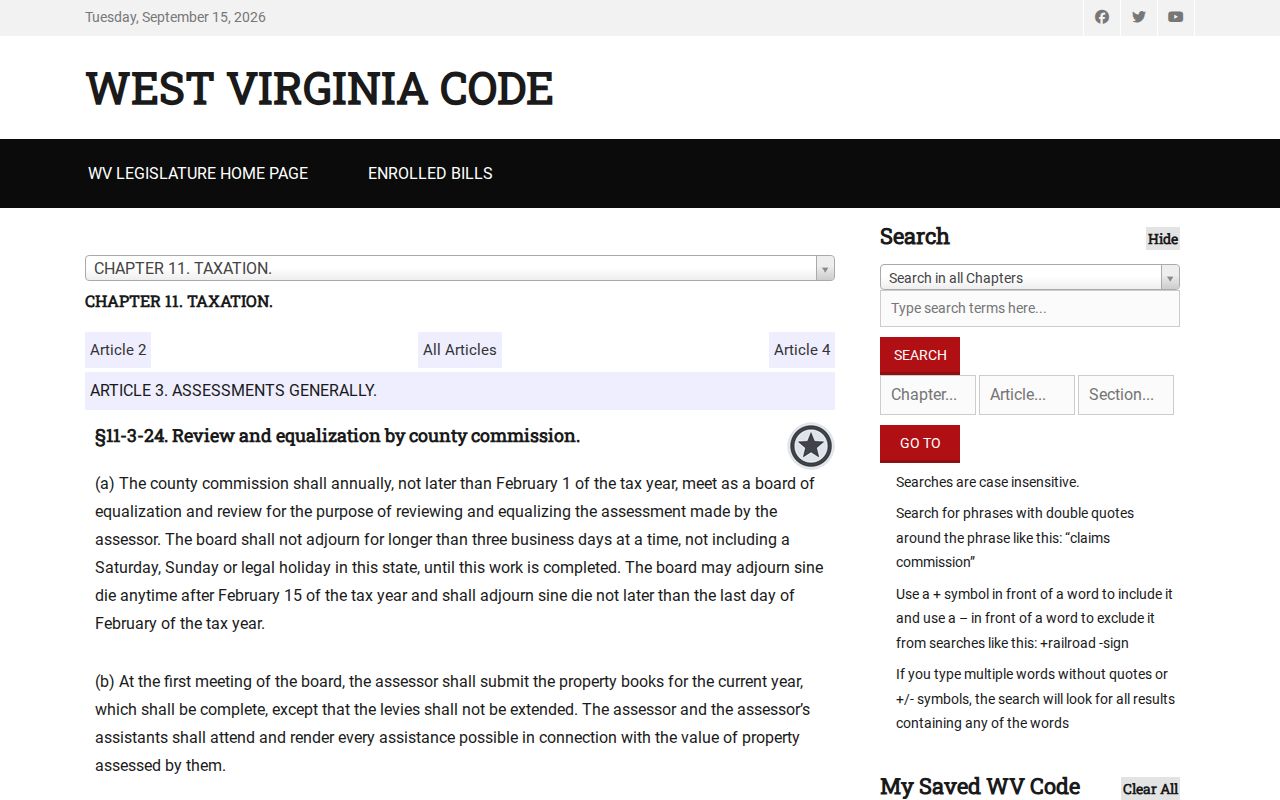
Bring the parcel account, assessed value, comparable facts, and the specific correction you want to the review.
Protest a Logan County assessment with records
A strong objection says what is wrong and backs it with evidence. A classification protest asks whether the account sits in the right class or taxable category. A valuation protest targets the assessed figure itself. The assessor can supply classification and taxability information. The Board of Equalization and Review handles valuation disputes. Keep those tracks separate so the request lands where it can actually be answered.
Before filing, gather the parcel account, map or parcel number, and assessment year. Also gather class, appraised value, and assessed value. Add any sales or improvement facts that support the claim. A deed price is one data point, not automatic proof of market value. The assessor's sales tool filters by date, price, square footage, acreage, and property type. It also flags whether a sale qualifies. Those filters matter, because a nonqualified sale weakens a comparison.
Logan County's appeal calendar shifts with each year's board notice and statutory timing. Check the current county dates and the relevant statute together. Keep a copy of any written objection or meeting notice.
Pay Logan County tax through the sheriff
The Logan County Sheriff's Office posts "Pay Taxes" and "Real Estate Tax Redemption" links on its site. These sit on the sheriff's own site. The sheriff collects real-estate taxes. The assessor, by contrast, sets property values and keeps the land books. No separate indexed tax-bill search address appears in official results. Start from the Sheriff's own page or call the office before entering payment details anywhere else.
For a current bill question, have the parcel or account number ready. Also gather the tax year, the owner name as shown, and any notice number. Ask whether a balance remains and how the office records payment. Redemption runs through its own link, and the legal stage should be confirmed there. A tax-sale notice, a late payment, or a GIS flag does not mean a foreclosure has finished. Nor does it mean an ownership transfer has finished.
The Logan County Sheriff's official page is the entry point for payment and redemption.
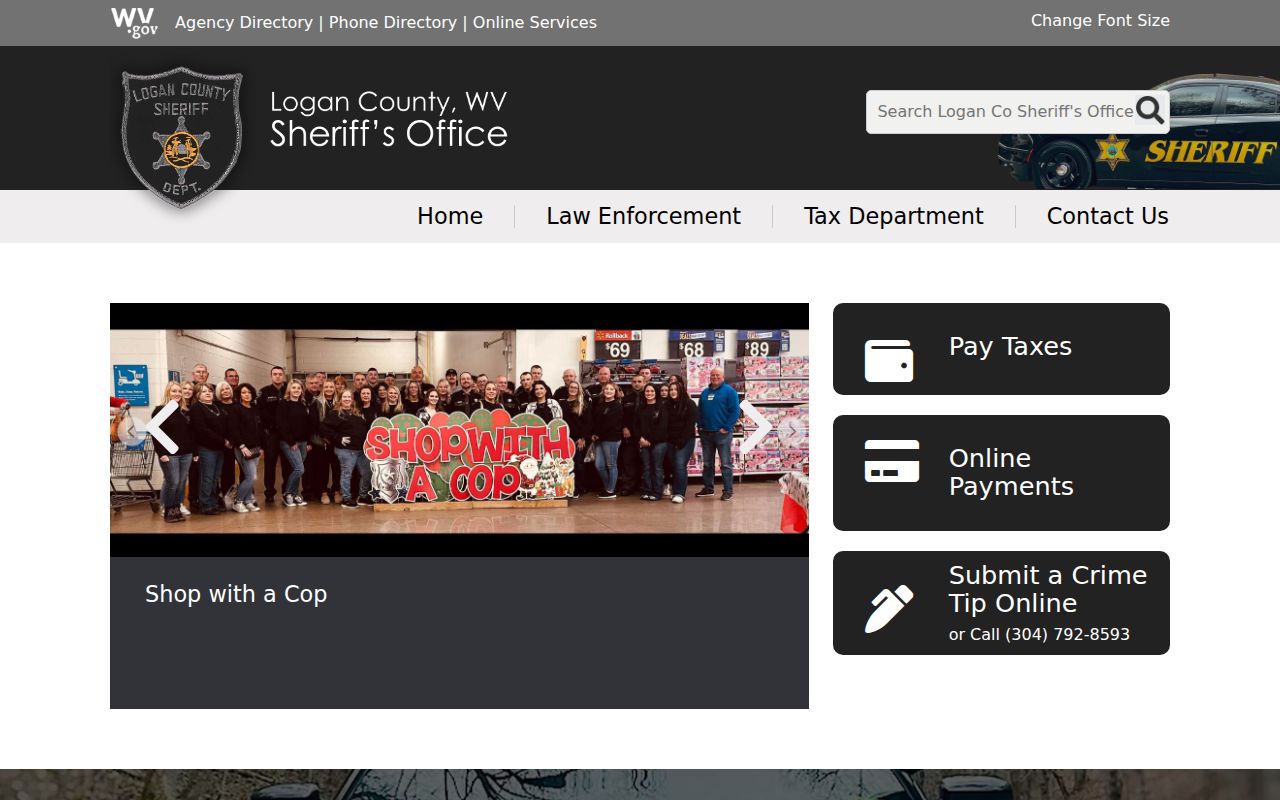
Use the official payment route, and save confirmation details with the parcel and tax year.
Delinquency is not a Logan County foreclosure
A delinquent status is a warning, not a verdict. It does not prove a sale happened. It does not prove a court entered a final order, or that a new owner holds title. Foreclosure, tax sale, redemption, and deed recording are separate events. The sheriff's link confirms tax status. Court access and county land records track a legal sale or transfer.
Logan County publishes no current tax-sale calendar, bidder rules, deposit amounts, redemption deadlines, or payment methods in one place. Ask the Sheriff for the applicable notice and rules rather than trusting an old schedule. A trustee report of sale is a named clerk recording category, but it is not a tax payment history.
For a contested or completed sale, identify the parcel and case number. Then request the court order, sale confirmation, deed, or release that applies. The date on a map marker alone cannot establish legal ownership.
Keep Logan County tax value distinct from sale price
Assessed value, appraised value, recorded consideration, tax, and market value are different things. A deed records a transfer and may state consideration. The assessor applies the statutory approach to reach assessed value. A levy rate then applies to the account. Market value is a question about a voluntary sale. It is not a field guaranteed by an old deed or a tax balance.
When reviewing a number, compare the assessor's fields and sales-search filters. Note the parcel type, acreage, square footage, qualification, and sale date. A nonqualified sale or a big acreage gap can make a comparison weak. The Logan County property value page explains the value fields. The tax page stays focused on the roll, payment, classification, and review.
Assessment records are public tools for tax administration. Verify any current balance and deadline with the responsible office before paying or appealing.